If you are drawn to places with real character, Nevada City’s historic core stands out fast. Life here is less about a polished, modern downtown and more about living inside a compact old-town setting shaped by Gold Rush history, walkable streets, local routines, and easy access to nature. If you are wondering what daily life actually feels like here, this guide will help you picture the pace, the housing, and the tradeoffs. Let’s dive in.
What the historic core really feels like
Nevada City’s historic center is anchored by the city’s National Register historic district, roughly bounded by Spring, Bridge, Commercial, York, Washington, Coyote, and Main Streets. The city itself is small, with 3,152 residents counted in the 2020 Census, and the core reflects that scale.
In practical terms, this is not a large downtown grid where you can keep walking for blocks and blocks. It is a compact old-town center where a lot of the daily experience is concentrated into a relatively small area. The city walking tour covers about 1 mile and takes roughly 1 hour and 30 minutes, which tells you a lot about the rhythm of the place.
Walkability shapes the day
One of the biggest lifestyle draws is how easy it is to move through downtown on foot. You can wander from shops to coffee to dinner to an art event without needing a big plan. That compact layout gives the area a lived-in, neighborly feel rather than a rushed commercial one.
That said, walkability here is selective. It works well for casual errands, meals, browsing, and community events, but not every practical need is covered within the historic core itself. If you are used to one-stop suburban convenience, this part of town will feel different.
Historic homes and older streets
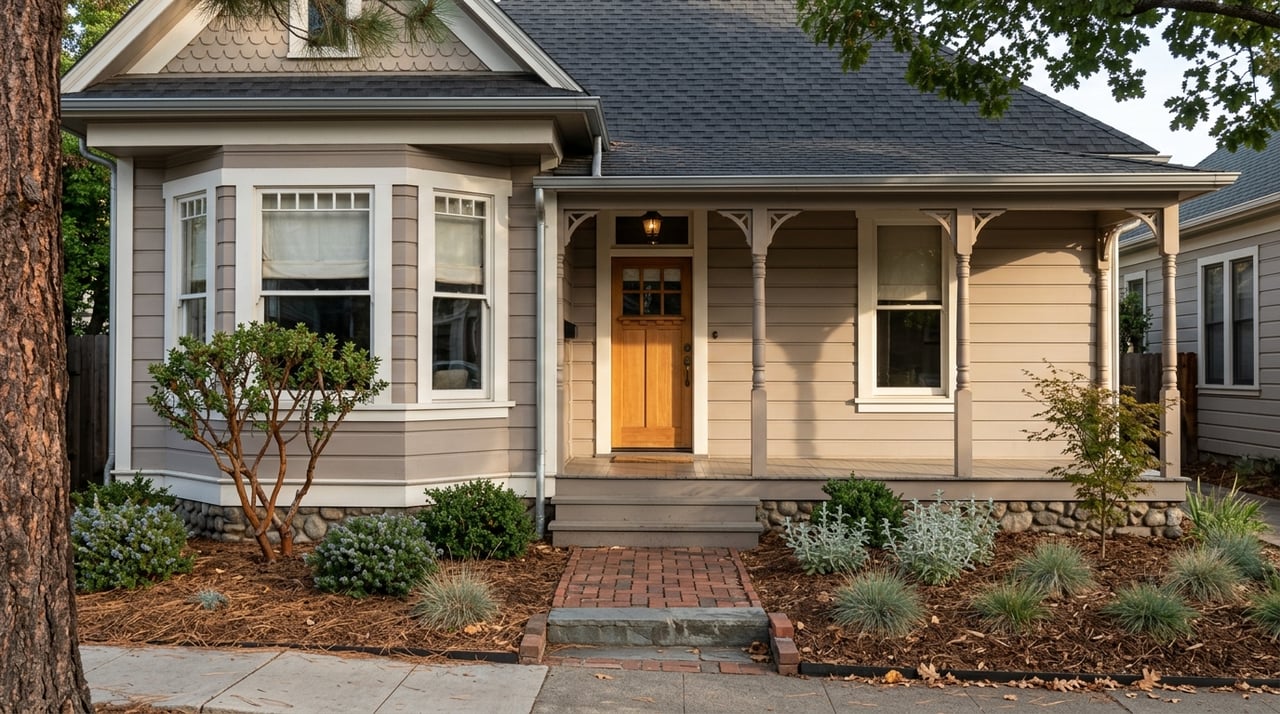
The housing around downtown tends to be older, visually distinct, and tied closely to the area’s historic identity. Local descriptions point to narrow Victorian streets and a quiet neighborhood of Victorian homes within a short walk of downtown, while the historic district also includes Italianate and Moderne architecture.
That mix matters because it gives the core a layered look rather than a single uniform style. You are more likely to see cottages, older single-family homes, and adapted historic buildings than newer large-scale subdivisions. For many buyers, that is the point.
Ownership comes with preservation rules
The same character that makes the area appealing also comes with more structure. Nevada City applies design guidelines to architectural-review projects inside the historic district and to pre-World War II buildings outside it. The city also maintains separate applications for architectural review, demolition, historical plaques, and historic-district signs.
For you as a buyer or owner, that means exterior changes may be more regulated than they would be in a typical neighborhood. If you value preservation and continuity, this can help protect the setting. If you want complete freedom to remake a property’s exterior quickly, it is something to weigh carefully before you buy.
Daily errands are small-town errands
Downtown Nevada City is set up for regular wandering and short errands more than big-box efficiency. Retail and dining are available seven days a week, although some businesses close on Monday or Tuesday, and many shops open between 10 a.m. and noon.
That schedule shapes your day-to-day routine. The core supports a lifestyle where you stroll, browse, stop for coffee, and build errands around the town’s natural pace. It is convenient in a local, small-town way, not in a suburban all-hours way.
Parking and practical access
Parking is part of daily life in the historic core, especially if you are heading downtown often. Many commercial streets have meters, and there are also free lots on Nevada Street and behind the National Exchange Hotel on Spring Street. The Commercial Street lot includes Level 2 EV chargers.
For residents, this setup is workable, but it is worth understanding upfront. Living near downtown can mean balancing the benefits of walkability with the realities of visitor traffic, metered parking, and a street pattern shaped long before modern car use.
Community life happens in public
A big part of daily life here is that the community calendar spills into the streets. The Nevada City Farmers Market takes place on Union Street between Commercial and Broad Streets with seasonal Saturday hours and a mix of produce, food, beverages, arts, and crafts.
First Friday Art Walks add another regular rhythm. Shops stay open late, artists show work inside businesses, and live music and street performances activate Commercial Street, York Street, and Robinson Plaza. If you like living somewhere that feels active without feeling oversized, this can be a major plus.
Arts are part of the local identity
Nevada City is not just historic. It is also deeply tied to the arts. The Grass Valley-Nevada City Cultural District is one of only 24 state-designated California Cultural Districts, and the area supports year-round music, theatre, dance, artists, makers, and festivals.
That creative presence shows up in everyday ways, not just special events. Walking tours, self-guided experiences, and public art efforts help keep art visible in public space. If you want a town where culture is part of normal life, not an occasional add-on, the historic core has that feel.
Essentials often extend beyond downtown
For many residents, downtown covers a lot of lifestyle needs but not every practical one. The Seven Hills District, about one mile south of historic downtown, is described as a local spot for essentials, with markets, casual dining, an arthouse movie theatre, and health and wellness services.
This matters because it gives you a more realistic picture of daily living. You can enjoy a walkable historic core and still rely on nearby areas for some routine needs. In real life, many people here likely use a mix of walking for local outings and driving for the rest.
Nature is part of the routine
One of the strongest advantages of living in Nevada City’s historic core is how close you are to outdoor space. The city owns about 300 acres of open space, with trails connecting downtown to Deer Creek and nearby viewpoints.
Local options include Miner’s Trail, the Nisenan section with the Suspension Bridge, and Sugarloaf Mountain, where you can reach forested switchbacks and views over the historic core. The city also notes that the Sugarloaf project is intended to create a seamless route from downtown to the mountain. That kind of access makes nature feel like part of the weekly routine, not a special trip.
Regional recreation adds flexibility
Nevada City sits in the Sierra Nevada foothills and is about 60 miles from both Sacramento and Lake Tahoe. For you as a resident, that creates a useful balance. The historic core can serve as a small-town home base, while the broader region opens up options for day trips and outdoor recreation.
That larger setting is part of why the area appeals to buyers looking for a foothill lifestyle. You get the texture of a historic town along with access to creekside walks, trails, and wider regional outings.
Tradeoffs to understand before you buy
Every neighborhood has tradeoffs, and Nevada City’s historic core is no exception. Transit, ride-sharing, and taxi options are limited in Western Nevada County, so most residents will still depend on a car for many trips beyond downtown.
You should also expect a different kind of housing experience than you would get in a newer subdivision. Streets are older, homes are often older, and preservation rules shape what changes are possible. For the right buyer, those are strengths. For someone who wants uniformity, large lots, or a strongly transit-based lifestyle, they may feel like limits.
Why buyers are drawn here anyway
For many people, the appeal comes down to character and lifestyle. The historic core offers older homes, preservation-minded streets, arts and events, and meaningful outdoor access in one compact setting. It feels personal, rooted, and hard to duplicate in newer neighborhoods.
If you are considering a move here, the key is to match the area to how you actually live. A good fit usually means you value walkable routines, local businesses, historic homes, and foothill access more than modern subdivision predictability. When that match is right, Nevada City’s historic core can be a very satisfying place to call home.
If you want help figuring out whether a specific home or block in Nevada City fits your goals, talk with William Segers. He brings a calm, practical approach to pricing, property evaluation, negotiations, and the details that matter in older foothill homes.
FAQs
What is day-to-day life like in Nevada City’s historic core?
- Daily life is centered on a compact, walkable old-town area with shops, dining, community events, historic homes, and nearby access to trails and open space.
What kinds of homes are common near downtown Nevada City?
- The area is generally weighted toward older single-family homes, cottages, Victorian-era streetscapes, and adapted historic buildings rather than newer large subdivisions.
What should buyers know about historic-home updates in Nevada City?
- Exterior changes in and near the historic area may be subject to city design guidelines and architectural review, so it is important to understand the approval process before planning major updates.
Can you handle most errands on foot in downtown Nevada City?
- You can cover many lifestyle errands on foot, such as dining, shopping, and local events, but many residents still drive for broader practical needs.
Where do Nevada City residents go for everyday essentials beyond downtown?
- The Seven Hills District, about one mile south of historic downtown, is known locally for essentials like markets, casual dining, an arthouse movie theatre, and health and wellness services.
Is Nevada City’s historic core a good fit for buyers who want outdoor access?
- Yes, the area offers strong access to city open space, trails to Deer Creek, the Suspension Bridge area, and routes toward Sugarloaf Mountain, plus a foothill location that supports day trips across the region.